How to Choose the Right Website
February 7, 2026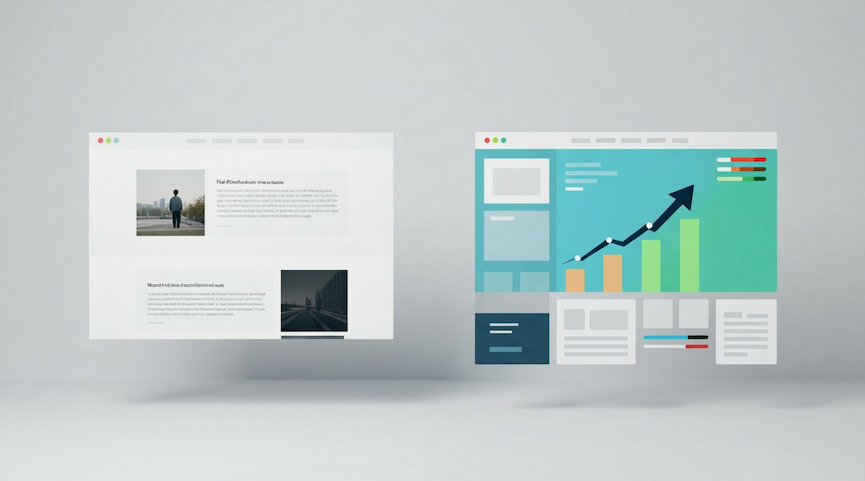
Have you ever opened a website and instantly felt unsure? Not because it was ugly but because it felt outdated, quiet, almost abandoned. You scroll once, maybe twice, and then you leave. No connection. No reason to stay.
Now imagine someone doing that on your website.
Most business owners don’t build the wrong website on purpose. They just build a website and move on. Somewhere along the way, terms like static and dynamic get brushed aside as “technical stuff.” But that choice plays a bigger role than you think in how people experience your brand.
This blog is here to help you make that decision with clarity, not confusion.
Why This Choice Deserves Attention
Your website is often the first place people go when they’re curious about your business. If it feels stiff, outdated, or hard to navigate, they don’t usually complain. They just leave.
That’s the quiet damage of choosing the wrong website type. Updates get delayed. Enquiries drop. Your business evolves, but your website stays stuck in an earlier version of you.
Ignoring this doesn’t cause an obvious failure but it slowly creates distance between you and your customers. And in a competitive digital space, that distance matters.
The good news? You don’t need to be technical to get this right.
Static vs Dynamic - What It Really Means
A static website is simple and fixed. The content stays the same unless someone manually updates it. These sites are clean, fast, and work well when information doesn’t change often.
A dynamic website is built to move. You can update content easily, add pages, publish blogs, collect enquiries, and adjust things as your business grows. It’s designed to change when you do.
Neither is good or bad on its own. The problem starts when the website doesn’t match how the business actually works.
5 Things You Should Honestly Consider
1. How Often You Need Updates
If your services, offers, or information change regularly, a static website can quickly feel limiting. When updates feel like a hassle, they often don’t happen at all.
A dynamic website makes updates feel normal, not stressful.
2. How People Interact With You
If visitors only need to read about you, static might work. But if you rely on enquiries, bookings, or contact forms, dynamic websites make that process smoother.
People expect websites to respond, not just exist.
3. Your Plans for Growth
A static website fits businesses that want to keep things minimal. A dynamic website gives you room to expand—new services, new pages, new ideas—without starting from scratch.
It’s the difference between something fixed and something flexible.
4. Cost Beyond the First Build
Static websites are usually cheaper to build. But every small change may require outside help. Dynamic websites cost more upfront but give you control in the long run.
What matters isn’t the first bill, it’s the long-term ease.
5. Who Manages the Content
If you want to update your website yourself, a dynamic setup with a content system makes life easier. You shouldn’t need technical help to change a paragraph or add a post.
That freedom is often underestimated until you don’t have it.
How to Decide Without Getting Overwhelmed
Start with one simple question: What do I want my website to actually do for my business? Not what others are doing. Not what sounds impressive.
A thoughtful digital marketing agency in Thiruvananthapuram will help you answer that before recommending anything. The best digital marketing agency in Trivandrum won’t complicate the process; they’ll simplify it.
At Misc Archive, we believe websites should feel like tools you can use, not systems you have to work around.
When your website fits your business, it quietly does its job.
Let Misc Archive help you turn your ideas into stories that connect and convert.


+91 8907634900
+91 8848608726

contact@miscarchive.com

Mon-Sat 9.30am - 6.30pm